

Tractors fulfill numerous functions on various farms and are among the machines now essential to farmers' productivity. However, they are also energy-intensive, and agricultural tractor fuel consumption is becoming one of the expenses that farmers need to monitor most closely. With the increase in fuel prices, particularly for non-road diesel (GNR), in recent years, a farm's fuel budget is growing, not to mention the general increases in other essential operating costs, such as raw materials.
Although there are now alternative fuels, more modern machines that consume less, and other solutions, it remains essential to know how to accurately calculate the fuel consumption of tractors in order to analyze and implement actions to achieve fuel savings.
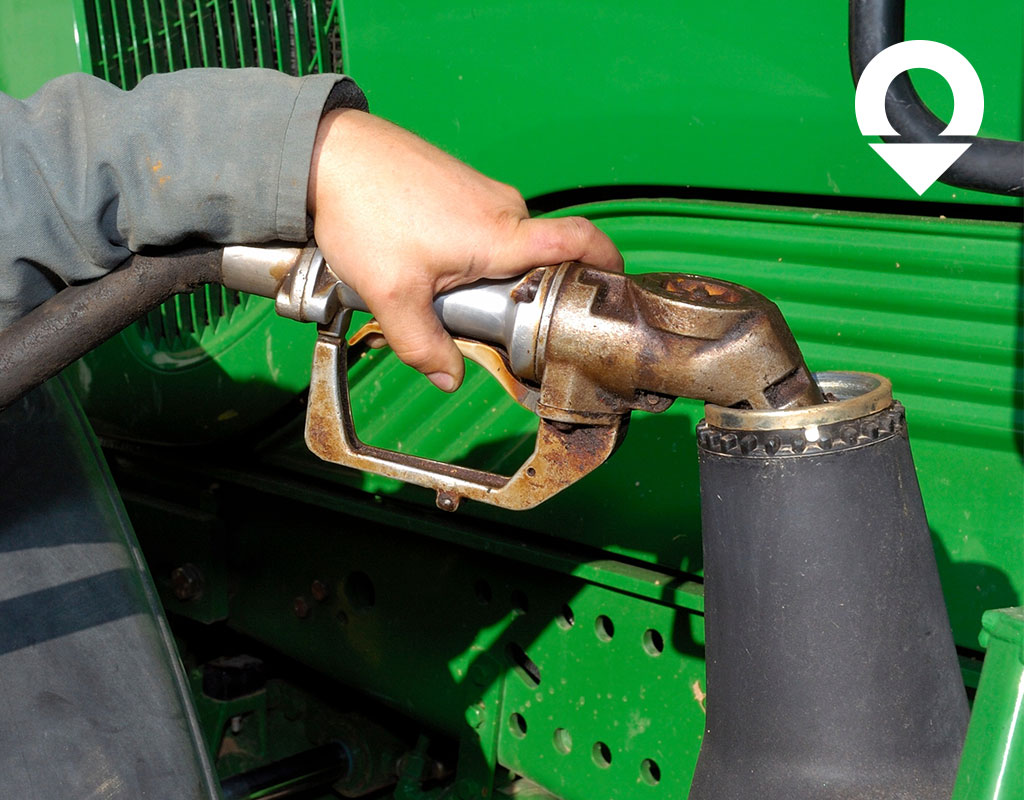
What is the fuel consumption of an agricultural tractor?
As we mentioned in the introduction, fuel is by far the most widely used energy source in French agriculture. The unit of measurement for an agricultural tractor's fuel consumption is expressed in g/kWh or liters. The g/kWh unit has the advantage of allowing comparison of the energy performance of various tractors, or rather their engines, independently of speed, terrain, or load. Consumption expressed in liters would indeed seem somewhat inconsistent at first glance, although conversion is always possible. For example, one might generally say that an 80 hp tractor will consume 35 to 40 liters per 100 km , but this doesn't make much sense compared to g/kWh.
Indeed, g/kWh takes into account the amount of fuel consumed by the engine to produce one unit of energy (1 kWh). An engine with a low consumption in g/kWh will therefore be considered more fuel-efficient and more effective.
Let's now look at some examples based on engine power. These are, of course, averages that can vary significantly depending on usage conditions and the overall maintenance of the vehicle.
Fuel consumption of a 150 hp tractor
For a 150 horsepower tractor, fuel consumption will be between 217 and 272 g/kWh for the most economical.
To convert this result into liters, you need to know the duration of operation and the percentage of power used. Let's assume the tractor runs for two hours at 80% of its capacity; the consumption would therefore be approximately 50 liters.
Fuel consumption of a 200 hp agricultural tractor
For a 200 horsepower agricultural tractor, consumption is between 214 and 263 g/kWh for those with good efficiency.
If the tractor's mechanical power is equal to or exceeds 2 hp/ha, mechanization costs and energy consumption skyrocket. To calculate the cost of agricultural machinery, simply use 0.1 L/hp/h as a reference value.
Let's take the example of a 155 hp tractor; it will consume approximately 15.5 L/hour. If the price of diesel is €0.65/L, the cost of fuel for the tractor will be €10/hour.
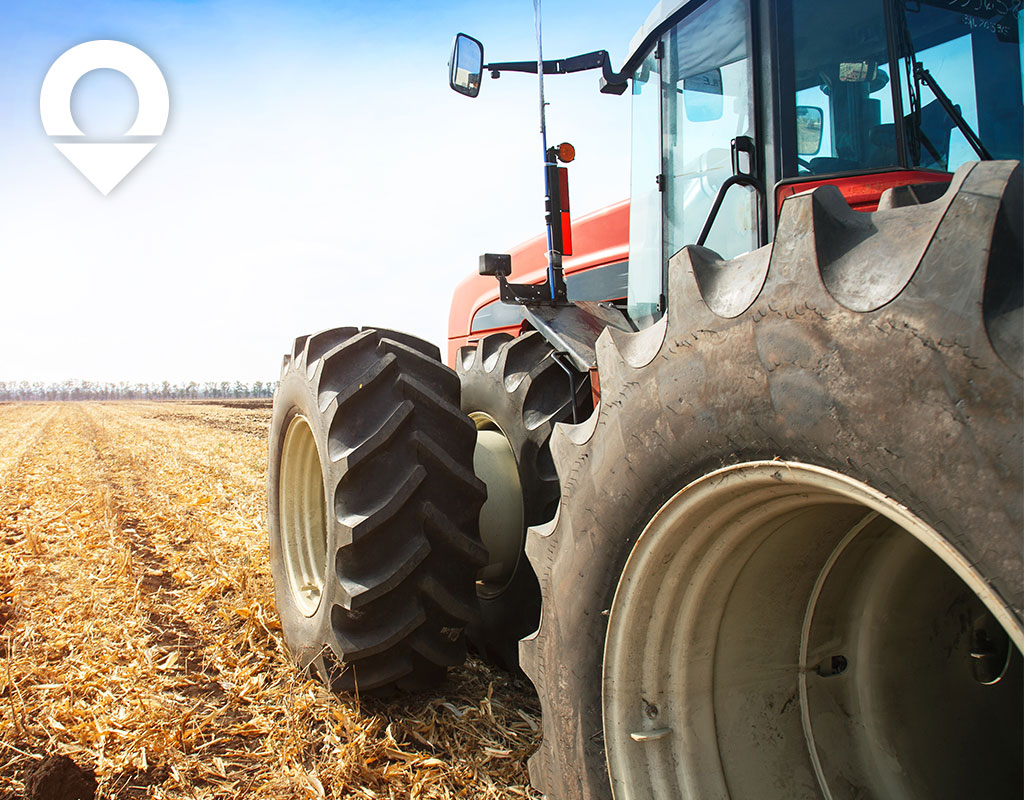
Which tractor consumes the least fuel?
It's important to know that, during dynamometer testing, the higher the maximum power measured at the power take-off (PTO), the lower the fuel consumption of a specific agricultural tractor and the more the engine improves its energy efficiency. Tests were carried out to create the various rankings below. We have listed the most fuel-efficient tractors on the market with a power output of 100 to 120 horsepower:
- The Lindner Geotrac 104 ep: The lowest fuel consumption is 219 g/kWh at 1,300 rpm. It has an operating efficiency of 39%. It is more economical than the Lintrac 90 and the New Holland T5.110 Electro Command.
- Tied for second place are the Claas Atos 350, the Massey Ferguson 5711, the Deutz-Fahr 5115 and the John Deere 5100R: all four absorb 245 g/KWh.
- At equal performance, in third position, the Kioti PX 1153, the Kubota M5111 and the Valtra A104: they consume 250 g/KWh.
For tractors with a power output of 120 to 150 horsepower:
- The New Holland T6.165 Dynamic Command: consumes an average of 217 g/kWh and has an efficiency of 40% at an engine speed of 1,600 rpm. It has a 4.5-liter FPT engine.
- The Frendt 313 Vario and the Case IH Luxxum 120 are both in second place: 223 g/kWh of fuel consumption. The Case IH has a 3.4-liter, four-cylinder FPT engine.
- The Landini 6-145 Roboshift: it consumes 272 g/KWh and has a utilization efficiency of 32%.
Finally, regarding those with a power output of 150 to 200 horsepower:
- The Case IH Puma 150 CVX and the Fendt 718 Vario consume 214 g/kWh at 1,500 and 1,300 rpm respectively. Their efficiency is 41%. The Case IH is equipped with a 6.7-liter FPT engine.
- The New Holland T6.180 Dynamic Command: it consumes on average 219 g/kWh.
- The Massey Ferguson 7716 dyna-VT: it absorbs 220 g/kWh.
Across all categories, from tractors ranging from 100 to over 300 horsepower, the most economical and powerful is the Fendt 1046 Vario, with a fuel consumption of 204 g/kWh and a maximum power output of 460 horsepower. Its operating efficiency is 43%.
The rise in agricultural fuel prices
What fuel is needed for an agricultural tractor?
Farmers use GNR or non-road diesel every day in their work.
The difference with diesel is that it has a reddish color which allows it to be identified, whereas diesel as we know it is transparent.
The increase in the price of GNR
The rising price of off-road diesel is directly impacting farmers, who are struggling financially. Indeed, for several years, and particularly since 2021, the price of off-road diesel was €0.70 per liter. The following year, in 2022, it increased to €0.90, then climbed to €1.60 per liter. Today, in 2023, its price is approximately €1.278.
Hence the growing importance of implementing actions and using existing good practices and technologies to minimize fuel consumption in agricultural tractors.

How to reduce your tractor's fuel consumption?
ADEME's best practices
To reduce your tractor's fuel consumption and, above all, the associated fuel costs, we will guide you by giving you several tips:
- Choose the "economical power take-off" option when purchasing: or "40 km/h" or even "booster".
- Don't choose a tractor that's too powerful: the goal is to avoid over-mechanizing. You need to match the machine to your needs and your activity so you don't end up with a tractor that's more powerful than necessary.
- Choosing the right tires: the more durable and suitable they are for your needs, the longer their lifespan will be. This also reduces the frequency of tire purchases. It's also crucial to check tire pressure regularly. Incorrect tire pressure can increase fuel consumption by up to 15%.
- Checking the tractor with technical bench tests and adjusting the engine: when maintaining the tractor's mechanization, checking these two parameters results in a saving of 1.5 liters of fuel and translates on average into a gain of €400 to €500.
- Undertake an eco-driving training course: in order to learn how to use the right lubricants and eco-driving practices .
The ECOLOW module for agricultural machinery
The solutions mentioned above, while effective, are insufficient to guarantee maximum savings. The issue of agricultural tractor fuel consumption is not only financial but also environmental. It is becoming essential to take action in this regard, and that is why ECOLOW, after many years of research and testing, has developed a fuel-saving module specifically designed for the agricultural sector.
Since 2018, we have been helping companies like yours reduce their diesel costs and environmental impact with our patented and European-approved system. It optimizes the combustion of non-road diesel, reducing consumption by 12 to 15%. Our non-intrusive units adapt to agricultural and forestry equipment without affecting the warranty and comply with European standards.