
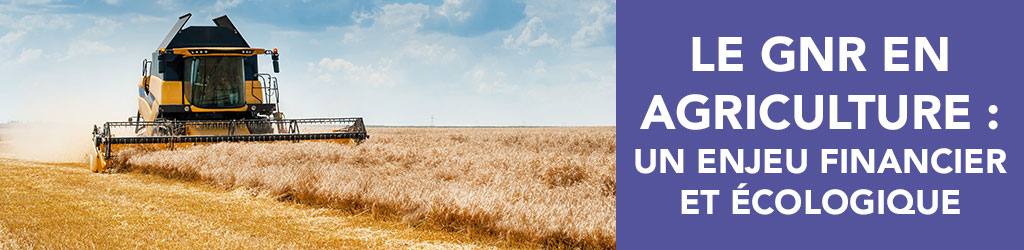
THE non-road diesel is a specific fuel used in agricultural, construction, and industrial machinery, which has been gradually replacing heating oil for several years. In France, the price of GNR (non-road diesel) is steadily increasing, prompting the government to consider its integration into farmers' daily practices, in order to avoid jeopardizing the agri-food sector while also contributing to the ecological transition. A closer look at the issue of GNR in agriculture in French territory with, at the end of the article, good practices and innovative technology to save fuel.
The impact of rising agricultural diesel prices
In France, for several years now, the price of agricultural diesel, like that of other fuels, has been steadily rising, and this situation is unfortunately not expected to improve. Let's look at the impact on the sector and farmers.
What price per liter for farmers?
In France, diesel (GNR) is available at an average price of €1.125 per liter. Reserved for agriculturaland forestry professionals, the price of non-road diesel varies depending on the geographical area in which they operate, as well as fluctuations in the European market and transport costs.
Why the sharp price increase?
The price of non-road diesel (GNR) has been rising since April 2021. This is due to the surge in oil prices resulting from the Russo-Ukrainian conflict, as economic sanctions have been imposed on Russia by various national actors (including Europe). This increase in GNR prices is causing concern in the agricultural sector and disrupting farming and forestry practices, which are actively seeking partial support to cope with this situation impacting their profitability. Consequently, the Minister of Labor and Ecology has announced the implementation of support measures to address agricultural concerns during this period of fluctuating GNR prices.
Government actions and aid.
Reimbursement of the agricultural TICPE
In response to the need for support in the agricultural sector, the government has implemented the reform of the TIPCE (Tax on for agricultural professionals and those in and public works sector. This reform ensures partial reimbursement of €0.1496 per liter of non-road diesel (GNR) (rate for the 2022 campaign). This state aid is part of the " Agricultural GNR Aid 2023 " project, which aims to limit the financial impact of the increase in non-road diesel prices on farmers. In addition to the partial reimbursement, subsidies cover a portion of the costs associated with transporting GNR to farms (crops and livestock).
The implementation of this government support illustrates the ongoing search for solutions to address the harmful effects of growing geopolitical conflicts worldwide and their impact on our consumption habits. Agriculture is one of the most important and most vulnerable sectors in France, and while government intervention is commendable, it is sometimes far from sufficient. This raises the question of switching to alternative fuels or electric vehicles .
Towards the end of GNR (non-road diesel) in farms?
The national low-carbon strategy adopted in France and elsewhere in Europe advocates reducing sales ofengine agricultural machinery by 2026 and shifting towards cleaner energy sources such as hydrogen, biogas, and electricity. Indeed, Europe has committed to reducing greenhouse gas emissions, and this naturally includes the agricultural (and forestry) sector, and therefore the use of non-road diesel (GNR) in agriculture. However, despite manufacturers and the latest energy innovations, it will be many years before such machinery can operate efficiently on agricultural and forest land. This is due to significant challenges such asbattery range and the deployment of charging infrastructure on farmers' fields. Until internal combustion engine vehicles are banned on all types of farms, it is essential to achieve maximum savings—both for farmers' profitability and for the protection of biodiversity!
How to reduce the consumption of non-road diesel in agriculture?
While awaiting a realistic option for switching to alternative solutions to power agricultural machinery, there are ways to combat rising prices by reducing agricultural diesel consumption. In addition to minimizing fuel costs, this also has a positive environmental impact.
Best practices for saving fuel
Apart from constantly seeking a more responsible mode of production, which therefore also involves the machines used, there are good practices that can be implemented without too much investment to save fuel.
- Eco-driving : by optimizing their driving (speed, fewer stops, obstacle avoidance), farmers reduce their carbon footprint and energy consumption. A great step to improve road safety and save the planet!
- Land swapping : this is of course not always feasible, it is in fact an exchange of plots of agricultural land with the idea of optimizing land use and water management, but also of having less travel to be made from one field to another.
- Testing your equipment on a test bench allows for optimal adjustments and the identification of potential problems. These adjustments often lead to significant savings, and this is clearly an underrated but highly recommended practice.
- Agricultural vehicle maintenance : Maintaining agricultural vehicles is extremely important when it comes to saving money. Indeed, the wear and tear of parts, the condition of tires, etc., are all factors that significantly impact the fuel consumption of your machinery .
ECOLOW technology
In addition to these good practices which will allow you to moderate the use of agricultural GNR there is a complementary and particularly effective solution for the types of machinery used on farms.
The ECOLOW module allows you to save approximately 12% to 15% on fuel consumption. After several years of research and numerous tests with our satisfied customers, we have developed this 100% patented and approved European technology. It is RoHS certified, a mandatory label for aftermarket accessories, because yes, the ECOLOW module does not affect your original components or your manufacturer's warranty.
It can be transferred from one machine to another, making it a very cost-effective and sustainable technology. Feel free to contact us for more information.