

AdBlue consumption is becoming an additional expense, especially as the price per liter tends to increase, representing a significant financial burden for the road transport sector . Discover everything you need to know about this new economic challenge and how to reduce its cost through various techniques and an innovation.
How AdBlue works for trucks and heavy vehicles
Before sharing consumption calculations and methods to reduce it, it is important to understand howAdBlue works for trucks and heavy vehicles in the context of the road sector and not for private individuals.
What is the difference between a truck and a car?
Contrary to what one might think, there is no difference in the composition of AdBlue whether it is intended for heavy vehicles or cars. It is a product composed of 65.7% demineralized water and 32.5% urea. It is not an additive per se, as it is not mixed directly with the fuel. Its function is to reduce engine pollution , specifically from diesel engines, as it is of no use to gasoline engines. Injected into the exhaust pipe, the product triggers a chemical reaction that transforms the nitrogen oxides emitted by the diesel fuel into water vapor and nitrogen. The real difference between heavy vehicles and cars lies in the number of liters of AdBlue consumed.
An obligation for the road sector?
It's often said that usingAdBlue is mandatory in the road transport sector. In reality, it's a bit more complicated. To protect the planet and air quality, there are legal pollution called Euro standards. These standards limit emissions of pollutants and fine particles from engines. The current standard is Euro 6, which has been applicable since January 1, 2014.
It specifies in detail that diesel engines must emit a maximum of 0.4 g/kWh of NOx, 1.5 g/kWh of CO, 0.13 g/kWh of HC, and 0.01 g/kWh of particulate matter. The SCR (Selective Catalytic Reduction) system allows compliance with these standards by reducing pollution and particulate emissions from engines.AdBlue is essential for the system to function, as it initiates the chemical reaction responsible for purifying diesel fuel vapors. While not strictly mandatory, its use is nonetheless essential, which comes at a cost. Furthermore, modern engines equipped with an SCR system cannot operate without AdBlue anyway.
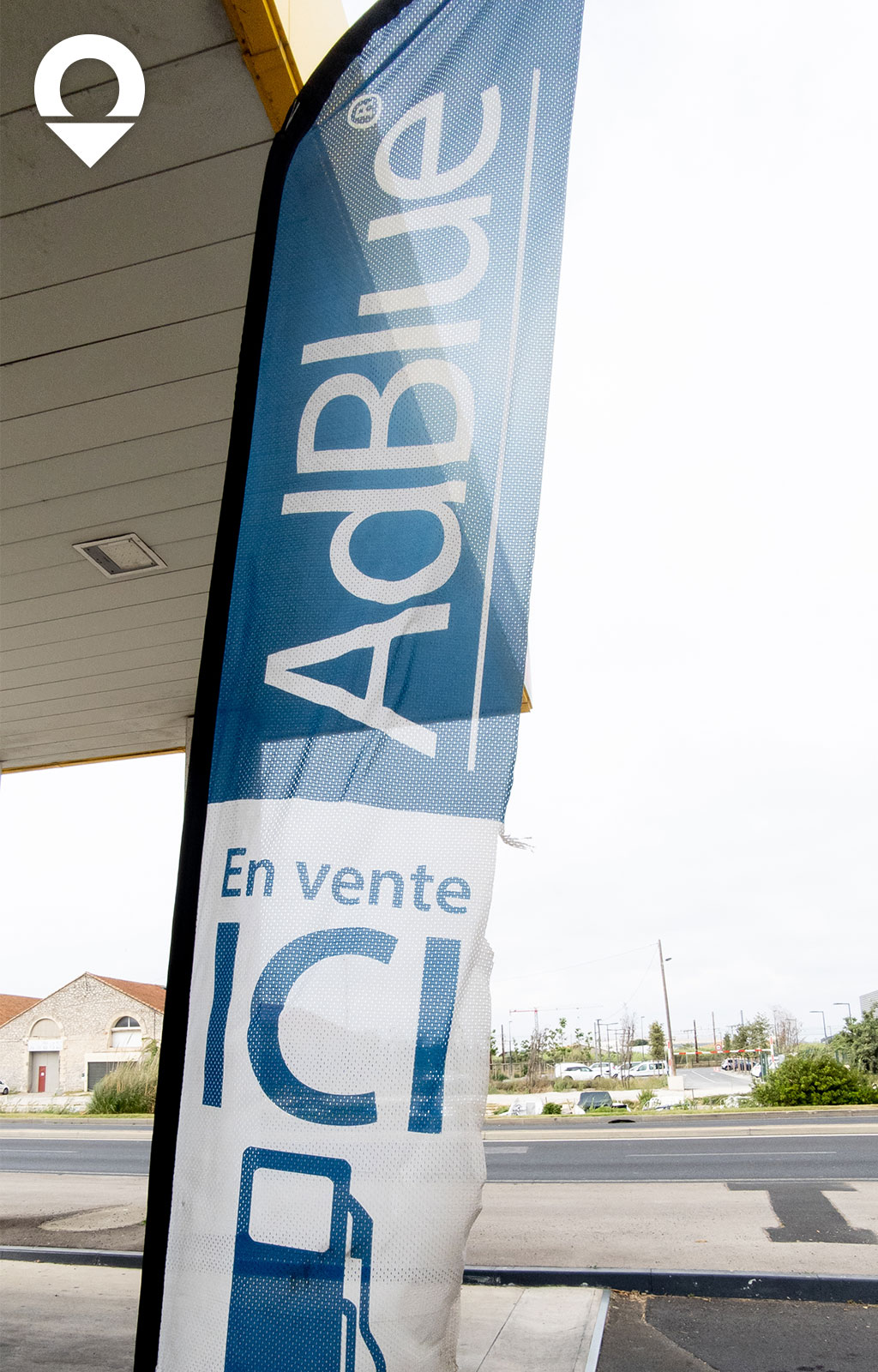
Calculate the AdBlue consumption of your heavy goods vehicles
Accurately calculating AdBlue consumption is crucial for transport companies, as the price per liter of this product is rising. This represents an additional financial burden on top of fuel costs for road operators who are already struggling in the market.
How to calculate your truck's fuel consumption?
There's a simple method for estimating the average AdBlue consumption per vehicle in liters. Specifically, you just need to calculate 5% of its fuel consumption per 100 kilometers. If a vehicle's engine consumes 32 liters of fuel per 100 kilometers, it consumes 1.6 liters of AdBlue per 100 kilometers. Even though this is an average estimate, this calculation is relatively reliable.
What is the driving range with a full tank of AdBlue?
Since its consumption is directly linked to that of diesel fuel, therange on AdBlue varies. Let's take the example of a heavy goods vehicle that consumes 1.6 liters of AdBlue per 100 kilometers. If it has a 30-liter tank, our truck can travel 1,875 kilometers. On average, the AdBlue tank needs to be refilled every 4 or 5 diesel fill-ups, which is far from insignificant. The range on a full tank depends not only on the tank capacity but also on the driving style and the vehicle's maintenance status.
How to reduce AdBlue consumption in your trucks?
To reduce a vehicle's AdBlue consumption needs , there are several effective and easy-to-implement solutions.
Adopt eco-driving
The AdBlue consumption of a car or truck depends on its diesel fuel requirements (it's not needed in gasoline engines). To reduce AdBlue needs and make the tank last longer, you need to save on diesel. The first step to lower consumption is to adopt eco-driving. Eco-driving involves driving at a constant speed as much as possible, without sudden acceleration or braking. You should also turn off the engine for any stop longer than 20 seconds and limit the use of air conditioning. This driving style saves on AdBlue and fuel. It also reduces the risk of accidents by 15%, which is far from negligible, and can also save on insurance premiums. A good way to protect lives and the planet while saving money.
Maintenance and loading of your heavy goods vehicles
In addition to eco-driving, it's important to properly maintain each vehicle to reduce diesel andAdBlue consumption. Tire pressure requires particular attention, as underinflated tires increase fuel consumption and the risk of accidents. Loading should also be optimized.
ECOLOW technology
Eco-driving and vehicle maintenance can saveon AdBlue and diesel, but the results are limited. To complement these efforts, there is a solution: theECOLOW fuel saver.
The ECOLOW system is a patented module compliant with European CE, SEEE, and RoHS standards . The unit can be installed on most vehicle brands on the market. What significantly distinguishes ECOLOW from a conventional system is its non-intrusive nature. Because it does not alter any engine components , the system preserves the original manufacturer's warranty and insurance coverage in the event of an accident
ECOLOW optimizes the calorific value of fuel before combustion using an electromagnetic field. Simple and quick to install, it allows for diesel savings of up to 7% in road transport, which automatically reduces AdBlue consumption.
The cost of the ECOLOW module and its installation is quickly recouped, as this energy saver has an unlimited lifespan. It is therefore a product that aligns with a sustainable approach. Please note that for guaranteed results, the energy saver must be installed by a technician certified by the company.
In summary, AdBluehas become a significant economic issue for the road transport sectorand the entire automotive industry. Essential for the proper functioning of vehicles equipped with SCR technology, it helps meet the pollution levels mandated by the Euro 6 standard, and its price continues to rise. To reduce AdBlue usage, it's necessary to consume less diesel fuel by utilizing all available technologies and methods. The ECOLOW fuel-saving device is a patented solution that is quick and easy to install. It's the only truly effective technology on the market. Feel free to contact our team to learn more and get information from our satisfied customers.